How to Pack a Surfboard for Air Travel
Traveling with your surfboard can be scary. You worry about dings or lost boards, and maybe consider renting at the destination instead. Here, I’ll go through my tips for packing surfboards based on my experience traveling throughout Latin America with various boards.
Planning Your Trip
The first step to traveling with your surfboard comes in the planning stage. When you are planning your surf trip, you should consider a few things related to your board. First, does the surf spot have a good selection of boards for rent?
We’ve found this varies significantly from spot to spot. The places we’ve gone in Guatemala have had limited options for rentals, while more popular spots like Puerto Escondido or San Juan del Sur have all of the board options you could want. If you are going somewhere with plenty of board rentals, bringing a board may not be necessary.
You also should consider the wave you’re going to and your skill level. Depending on the type of break, time of year, and how you surf, you should bring a board appropriate for all three. You don’t want to end up with a longboard at a hollow double overhead wave or a shortboard at a mushy longboard wave.
Finally, you should check airline policies. These can be hard to find. Ho Stevie has a solid list you can check. We also often use AI to help us find current data. Here in Mexico, we generally try to fly with Aeromexico or Viva Aerobus as they have the most generous policies surrounding cost and length.
Choosing the Right Surfboard Bag
I have seen people travel with bags just wrapped in bubble wrap and it absolutely horrifies me. Get a legit board bag. They can be expensive, but well worth it in my opinion. A solid board bag helps protect your board, and will often have a handle or a way for baggage handlers to handle the board more easily.
We love the Creatures bags personally. This isn’t even an affiliate link or anything; the bags have legit served us well. We have the Double DT2 bag for our longboard and mid-length. It fits two boards with all of our packing (more on that in a moment), solid protection, handles, and extra padding on the nose and tail.
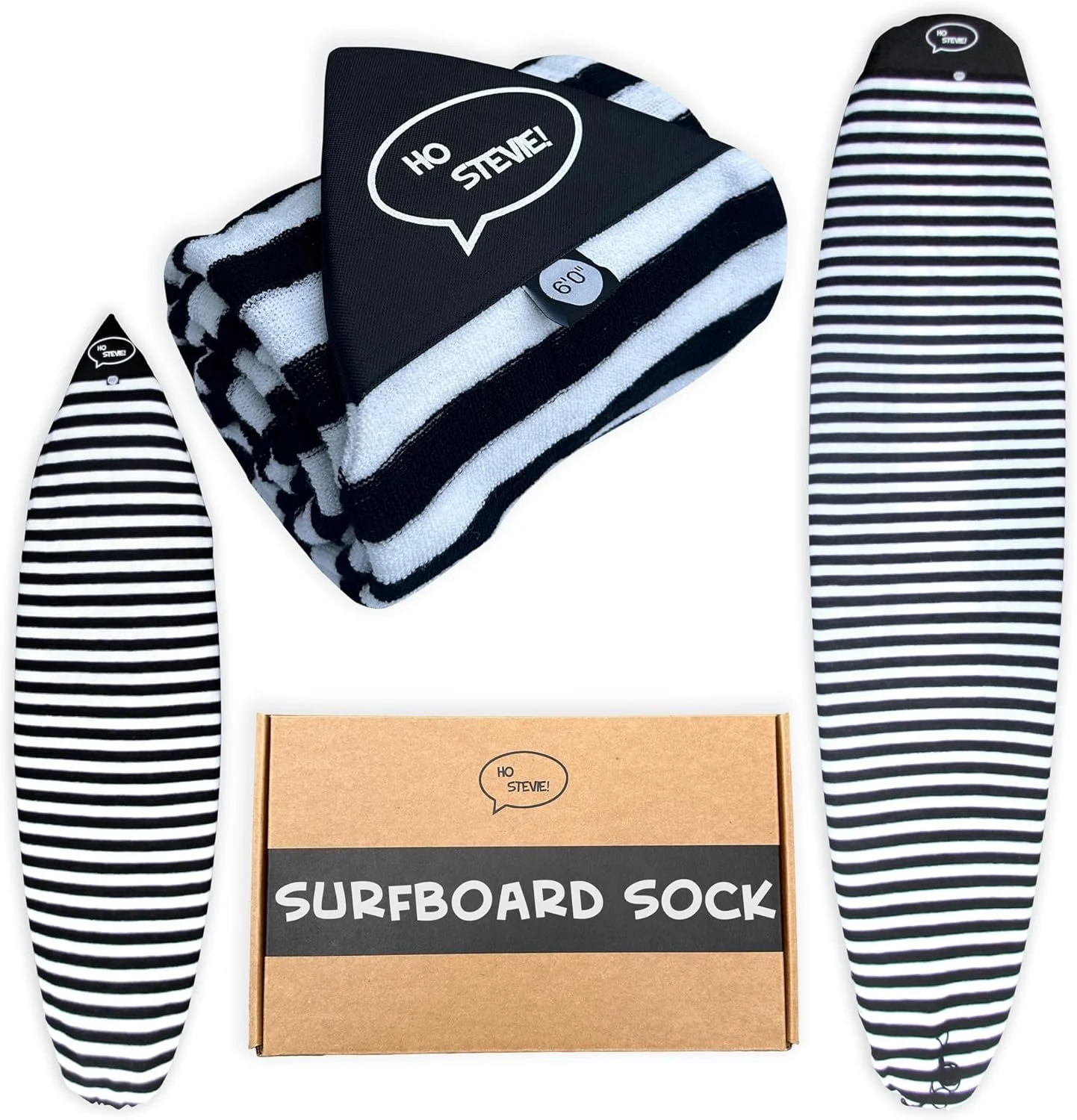
We also put our boards inside a board sock inside the bag. It may seem like overkill, but having the right equipment is the best place to start. Investing in a solid board bag and board sock can be a little expensive, but it’s cheaper than having to constantly repair your board or buy a new one!
Packing Your Boards
Okay, on to actually packing your surfboard for your trip. There are many ways to do this, but here’s what we do. Here’s what you’ll need:
Board bag
Board sock (optional)
Cardboard
Bubble wrap (optional, we don’t use)
Masking tape or plastic wrap
Let’s start at the beginning. The first thing we do is take old cardboard and cut it to match the outline of the board as closely as possible. It doesn’t need to run all the way to the rails; maybe leave a few inches of space. We put this cardboard on both top and bottom.
Some people use bubble wrap instead or in addition. Frankly, we never use bubble wrap. The cardboard absorbs a fair amount of pressure and prevents dings fairly well, especially when the board is already inside a board bag (and board sock).
We then use foam pipe insulation around the rails, nose, and tail. You can use pool noodles, but we’ve found foam pipe insulation to be both a little firmer and significantly cheaper. You can cut them the long way and slide them onto the rails to protect this vulnerable spot.
We also use foam pipe insulation on both the nose and tail. Cut a piece big enough to cover both nose and tail, cut them open, and fit them around the nose and tail. These are commonly-dinged spots, so this is a super important step.
To secure everything in place, you have several options. You can use masking tape, which seems to be the most common solution. Start by taping down the cardboard to cover the top and bottom, then move on to the rails/nose/tail.
It’s definitely not as sustainable but you can also use plastic wrap. This is what we generally do. It keeps you from taping your board, and actually holds everything in place better in our experience. We use plastic wrap around nearly the whole board to hold everything exactly where we want it.
Once the board is all prepped, into the bag it goes. If you’re carrying more than one board in your bag, you might want to put some shirts or a towel between the two boards as well.
Tips to Protect Your Board
In addition to packing your board correctly and preparing for your trip, here are a few tips we’ve found over our years traveling with boards.
Remove Fins
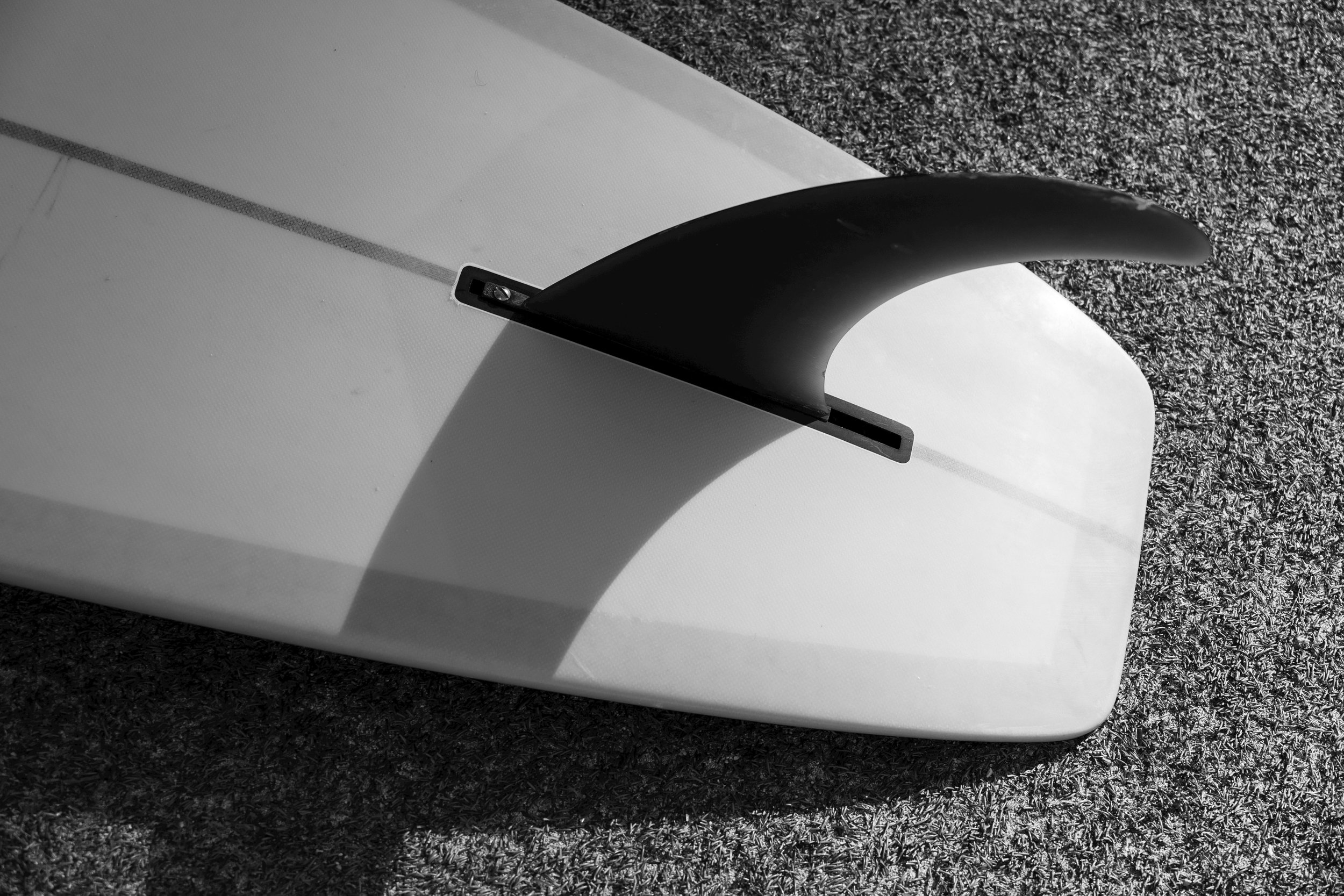
This may seem obvious, but we’ve legit been asked if fins should be removed. Yes. If you don’t remove your fins, you’re almost certainly going to have problems. Take the fins out and bring them in your carryon.
I’ve never had a true problem with my fins in my carryon bag personally. I have been stopped at security a few times in Mexico and in Panama, but they never take them away. You can also leave the fins wrapped in clothing or a towel in your board bag.
Don’t Overpack
This is probably my most important tip, and something I see wrong on the internet all the time. Some people recommend packing your board bag with towels, wetsuits, and extra clothing to add extra padding. I see the argument here, but I have to disagree.
You want to keep your board bag as light as possible. If it’s heavy, it is more likely to be tossed around by the baggage handlers. You want to strike a balance between weight and protection. I don’t ever throw extra stuff in the board bag and have had fairly good luck while traveling with surfboards.
Keep it Snug
Sometimes boards aren’t a perfect fit for the bag, and they might have some room to move around inside. It’s helpful to prevent this however possible. The bag we mentioned above has straps inside to hold the boards still, which is a great characteristic of a solid board bag.
If your bag doesn’t have a strap and has some wiggle room, now is the time to add a little bit of extra padding. You want your board to fit well inside the bag so it isn’t moving around during the travels.
Test it Out
Once you have your board all packed, test it out. Obviously don’t throw it how a baggage handler might, but give it a little shake. See if it moves around. Set it down at various angles and make sure at no point is the board unprotected. This can help find weak spots or places to reinforce.
Be Prepared for Dings
Even though you can hope for the best, you should plan for the worst. When putting together your surf trip packing list, make sure to include materials to fix any dings. Many surf spots will have a ding doctor or place to get repairs, but not all.
I generally bring some Solarez for small dings to hold me over. If you’re not familiar, Solarez is epoxy resin that cures quite literally in minutes in UV rays. It’s not necessarily a long-term fix, but it holds super well for a few days on a surf trip.
For bigger dings, I bring Ding All kits. It comes with the resin you need to mix, sandpaper, and fiberglass fabric. You may want to bring some extra popsicle sticks as well, but this is the way to fix a ding on the go as long as you have space and time to leave it to cure.
Both of these should go in checked baggage in my experience. I had my Solarez taken at security once in Mexico.
Open the Bag at Airport
When you land, you may be tempted to get on your way. However, it’s important to check the board as much as possible at the airport for any damage claims. If you leave the airport with a dinged board, the airline can claim you dinged the board after you left and they are free from responsibility.
We generally open the board bag there at baggage claim, and give it a quick revision to look for any dings. If you do have dings, you can go to the counter of the airline you just flew to make a claim. Be prepared for a bit of a battle though, as our experience is that they rarely want to cover anything.
Consider Travel Insurance
If you are really worried about your board and the cost of any damage, consider travel insurance. On top of airline coverage and insurance, third-party travel insurance can help cover the cost of any damage or dings to your board!
More Posts